Most mid-market organizations are not optimizing software licenses. They’re renewing them.
There’s a difference.
Renewal is administrative. Optimization is operational. And if you’re running IT for a 500 to 3,000-employee organization with a lean team, you already feel it. More renewals. More vendor emails. More tier changes. More pressure to reduce costs without reducing capability.
Software license optimization isn’t about cutting tools.
It’s about eliminating drift before it becomes permanent.
What Software License Optimization Actually Is
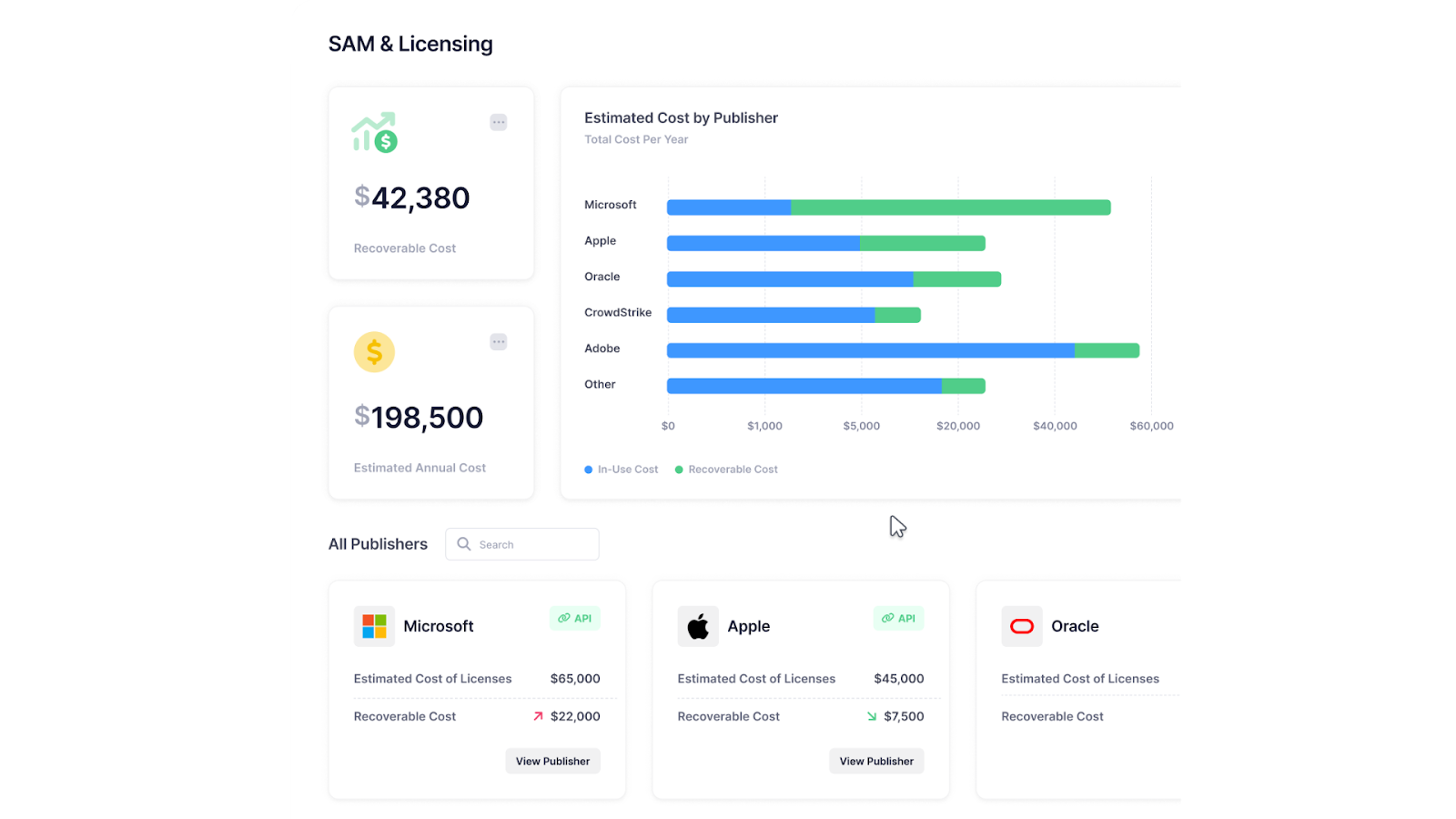
Let’s simplify it.
Software license optimization is the discipline of aligning:
- What you’re paying for
- What you’re entitled to
- What’s actually being used
- What’s actually needed
When those four align, waste drops naturally.
When they don’t, three things happen:
The result is predictable: overpayment, increased audit exposure, and reduced operational clarity. At its core, license optimization is a visibility problem first and a cost problem second.
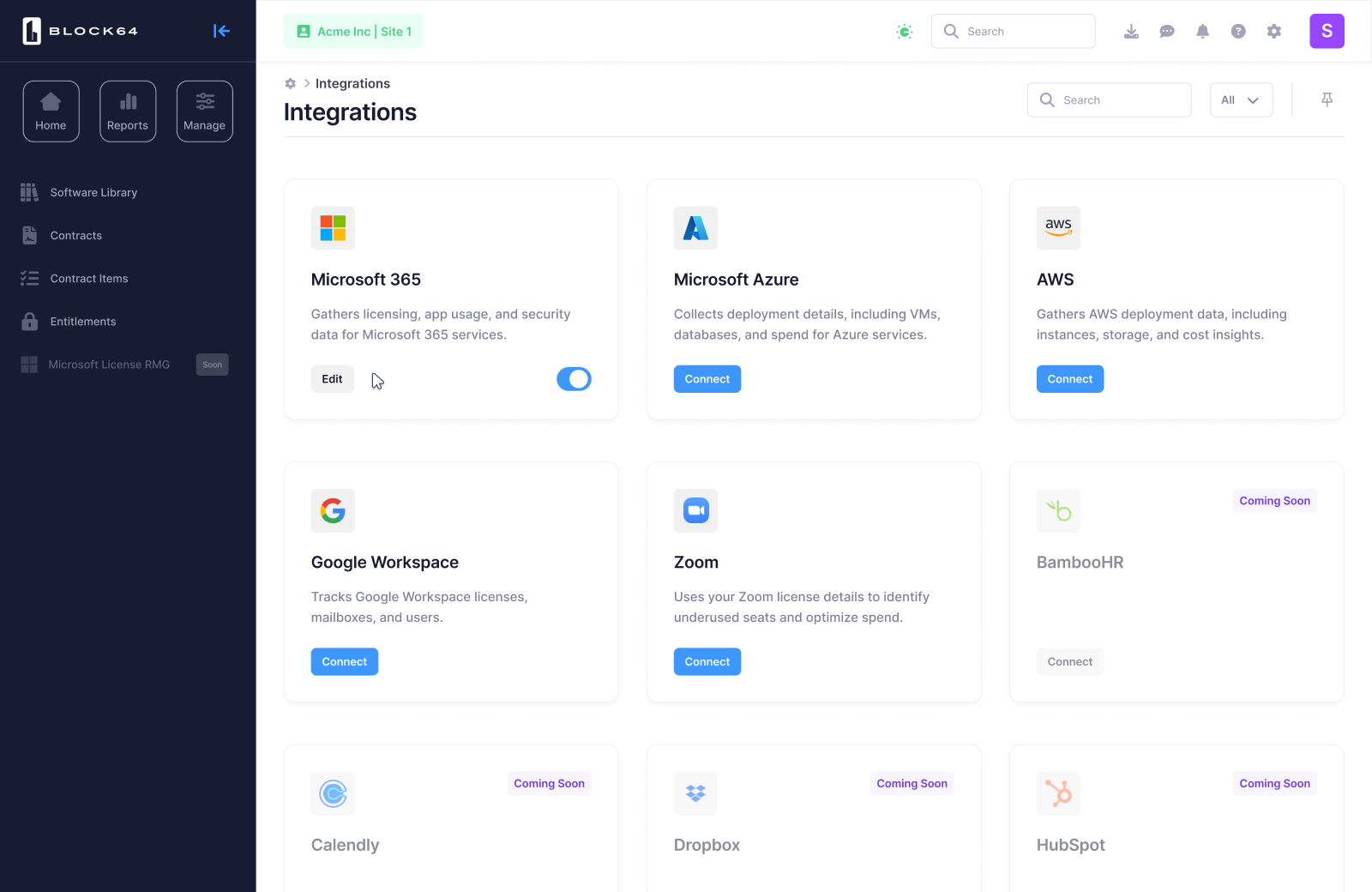
This same visibility gap is what drives SaaS sprawl across mid-market environments, as outlined in our analysis of SaaS sprawl trends and control challenges.
License Optimization by the Numbers
Across industry benchmarks:
- 20 to 30 percent of SaaS licenses are unused or underutilized.
- Many mid-market organizations now manage more than 100 SaaS applications across departments.
- Frequent licensing model changes are not hypothetical. They are happening now, as detailed in our breakdown of major software licensing changes in 2026.
- Licensing true-ups frequently stem from entitlement mismatch rather than intentional non-compliance.
Now ask yourself:
Can you produce, in under ten minutes:
- License count versus active usage for your top five platforms?
- A clean renewal calendar for the next 90 days?
- Entitlement documentation ready for audit?
If not, you don’t have optimization.
You have estimates.
Why the Problem Exists
Software license waste isn’t created by bad decisions.
It’s created by fragmentation.
Department-led purchasing
SaaS is easy to buy. That’s the business model.
Marketing upgrades tiers.
Finance adds niche reporting tools.
Engineering adopts specialized platforms.
Individually, each decision makes sense.
Collectively, the estate drifts.
The hidden costs of that drift compound over time, as explored in our analysis of the real financial impact of SaaS sprawl.
Tier complexity
Unused licenses are visible.
Mis-tiered licenses are not.
Enterprise-level plans are often assigned broadly, while advanced features are used by a fraction of users. Premium becomes default. Default becomes permanent.
Renewals do not create waste.
Incomplete visibility does.
Renewal pressure
When contracts approach renewal, most teams default to last year’s counts plus buffer.
Negotiations happen without clean usage evidence.
True-ups become defensive exercises.
Counts increase incrementally.
Drift compounds.
Fragmented systems
Usage lives in admin consoles.
Contracts live in shared drives.
Procurement data sits in finance systems.
Identity data lives elsewhere.
No single operational view connects entitlement, usage, renewal exposure, and risk.
Optimization without unified visibility becomes estimation.
The Real Cost of License Drift
The financial waste is obvious.
If your SaaS budget is $2 million annually and even 25 percent is misaligned, that represents roughly $500,000 dollars in unnecessary spend.
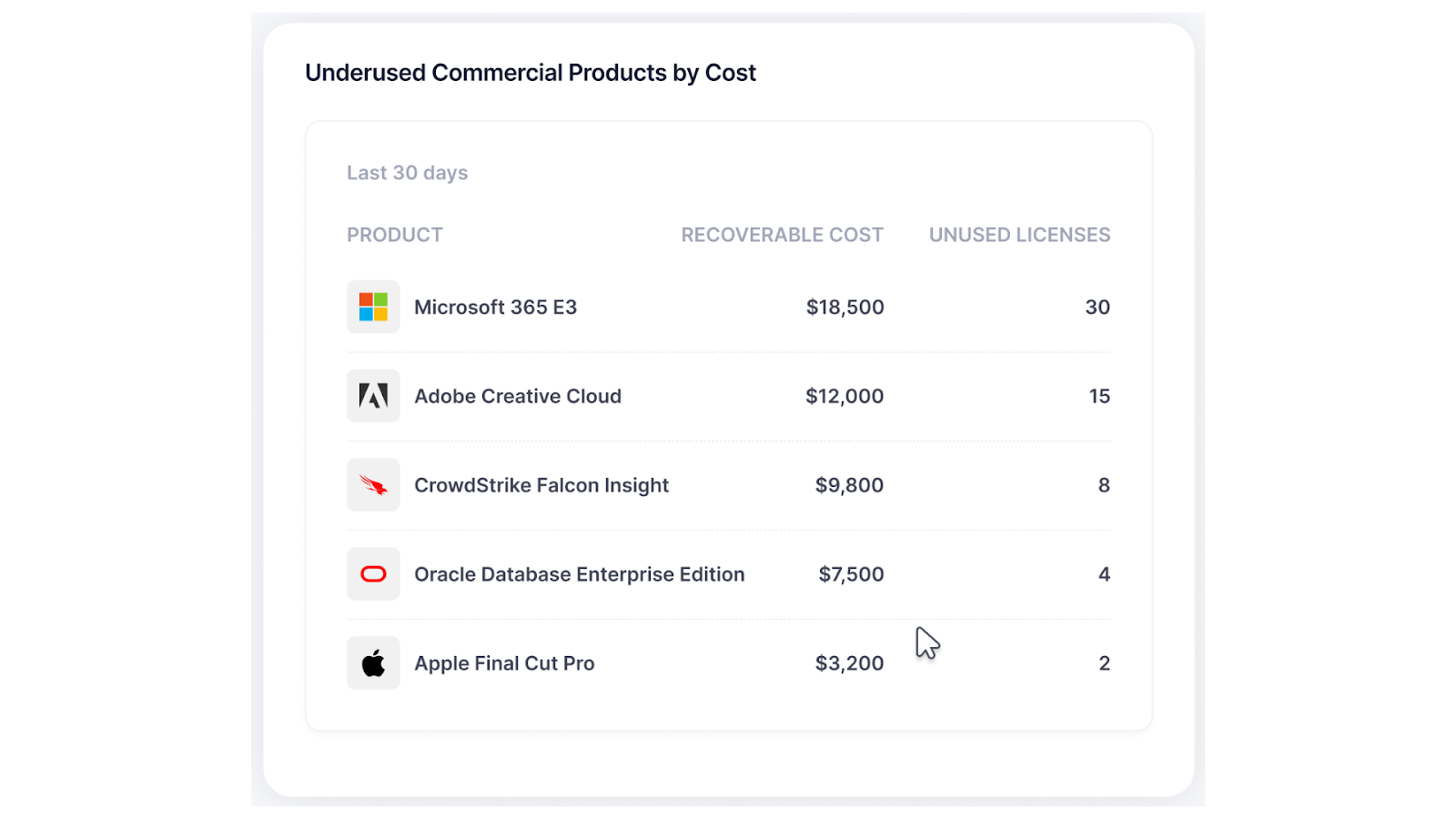
In environments where visibility has never been consolidated, organizations often uncover reclaimable licensing opportunities reaching seven figures. Not because teams are careless, but because blind spots compound over time.
Our breakdown of how much IT leaders waste across cloud, SaaS, and hardware budgets illustrates how quickly these numbers escalate in hybrid estates.
But cost is only one dimension.
Audit exposure
Licensing audits are predictable.
Entitlement mismatches, not malicious behavior, typically trigger compliance penalties.
Recent data shows how common vendor audits have become, as detailed in our analysis of the software audit surge.
Additional research from 500 ITAM professionals reinforces how widespread licensing chaos and entitlement drift have become across the mid-market environment.
Without continuous reconciliation between usage and entitlement, audits become reactive events.
Executive reporting friction
When leadership asks how spending aligns with value, manual aggregation across spreadsheets signals structural weakness.
Security and access risk
Dormant accounts.
Overprovisioned permissions.
Untracked tools.
License visibility and access visibility are linked. Drift in one often signals drift in the other.
This is not a budgeting issue.
It’s an operational clarity issue.
Without clear visibility into entitlement and usage, cost optimization becomes guesswork.
A Quick Optimization Check
Answer yes or no:
- Can you see assigned versus active license usage in real time for your top platforms?
- Do you have documented tier assignment standards?
- Can you forecast renewal exposure 90 days out?
- Can you produce entitlement mapping for audit in under an hour?
- Can leadership see one consolidated view across SaaS, cloud, and on-prem environments?
Few mid-market IT teams can answer yes to all five.
Not because they lack skill.
Because their tooling was never built for hybrid visibility at this scale.
The Shift Forward-Looking IT Leaders Are Making
The strongest IT leaders are reframing license optimization.
The question is no longer how to reduce spending.
The question is how to reduce blind spots.
Savings follow clarity.
This shift aligns closely with why modern ITAM is increasingly positioned as a strategic advantage rather than a back-office function.
In a recent engagement with Onyxion, consolidating visibility across SaaS, licensed software, and cloud workloads surfaced between $1 million and $1.5 million in reclaimable licensing opportunities.
The result did not come from aggressive cost-cutting. It came from aligning entitlement, usage, and renewal exposure through a unified operational view.
The shift was not about reducing capability. It was about eliminating blind spots.
When visibility improves, waste becomes measurable.
When waste becomes measurable, it becomes correctable.
Where a Visibility Layer Changes the Equation
Spreadsheets can be used for inventory.
Admin consoles can show partial usage.
Finance systems can show cost centers.
None of them unify entitlement, usage, renewal exposure, and risk signals into a single operational view.
This visibility gap is the core challenge addressed in our analysis of the modern IT visibility crisis.
That is why many mid-market teams introduce a dedicated visibility layer. Not to replace IT asset management processes, but to make them defensible.
Block 64 was designed to provide that unified visibility layer.
It is not a cost-cutting tool. It consolidates SaaS, licensed software, cloud workloads, and endpoint data into one continuously updated operational view. The objective is license intelligence rather than license counting, reducing unknowns across the hybrid estate.
Why This Becomes Table Stakes
AI tool adoption is accelerating across departments, expanding the software footprint faster than most IT teams can manually track. At the same time, vendor packaging complexity continues to increase, and financial scrutiny around IT spending is tightening.
Security expectations are rising as well. Visibility gaps are no longer just a budgeting issue — they are operational and risk issues.
In that environment, license optimization stops being optional. It becomes baseline operational hygiene.
Software footprints will grow. That much is certain. The more important question is whether your visibility will scale alongside that growth.
Software license optimization is not about cutting capability. It is about eliminating blind spots before they compound. Establishing a unified visibility layer changes the equation. Without clarity, optimization becomes estimation, and estimation inevitably leads back to renewal.
Organizations that want to understand their current visibility maturity often begin by examining how a unified operational view functions across SaaS, licensed software, and cloud environments.